SaaS platform
Packing videos that settle "item missing" claims
Online sellers needed proof of what went in each parcel. I built the browser packing station that films every order, plus the portals and the customer video page.
- Client
- FulfillCam, a packing-evidence platform for online sellers
- My role
- Full-stack software engineer
- Timeline
- 18 months
- When
- 2024 — 2026
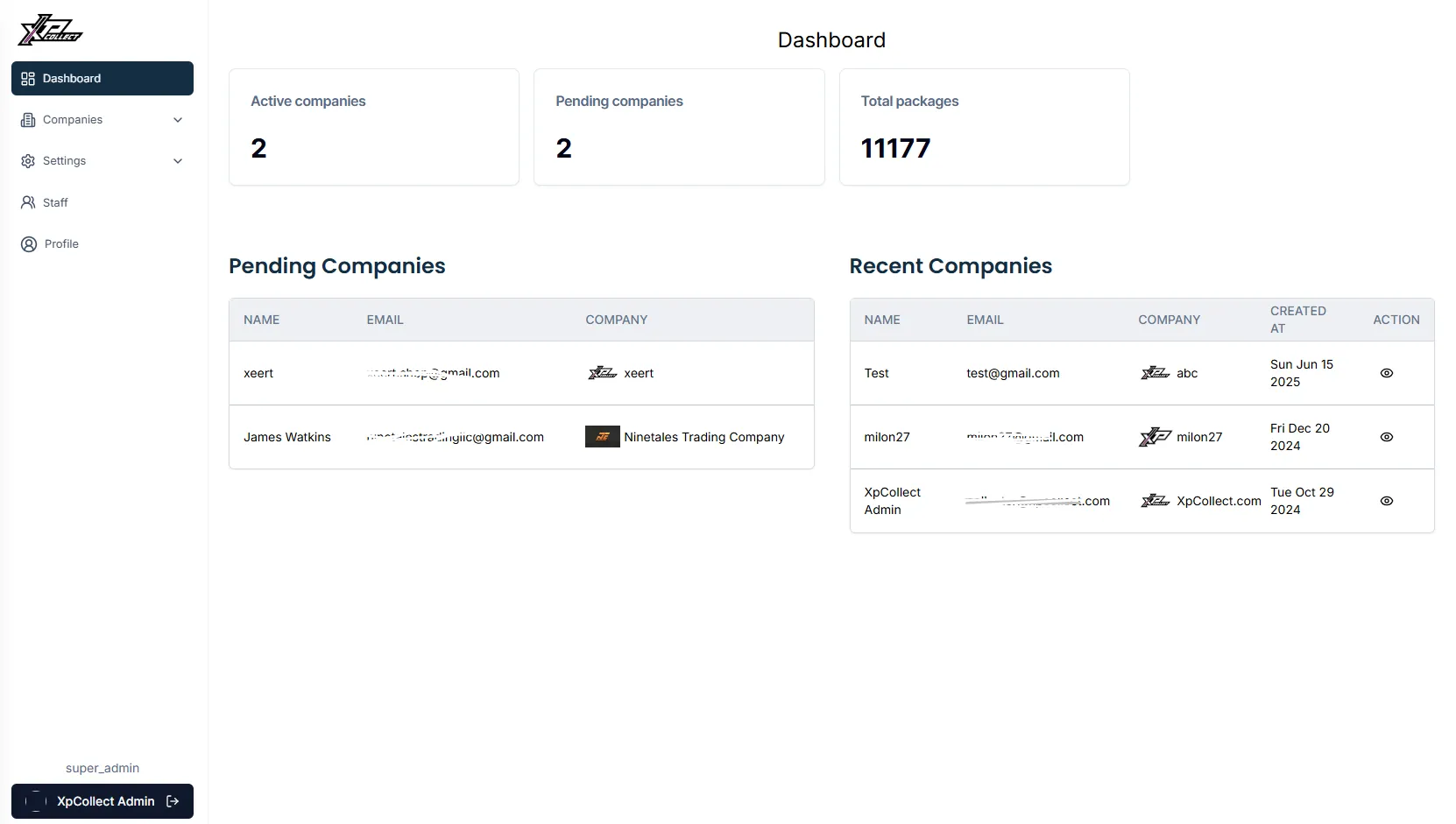 Admin dashboard
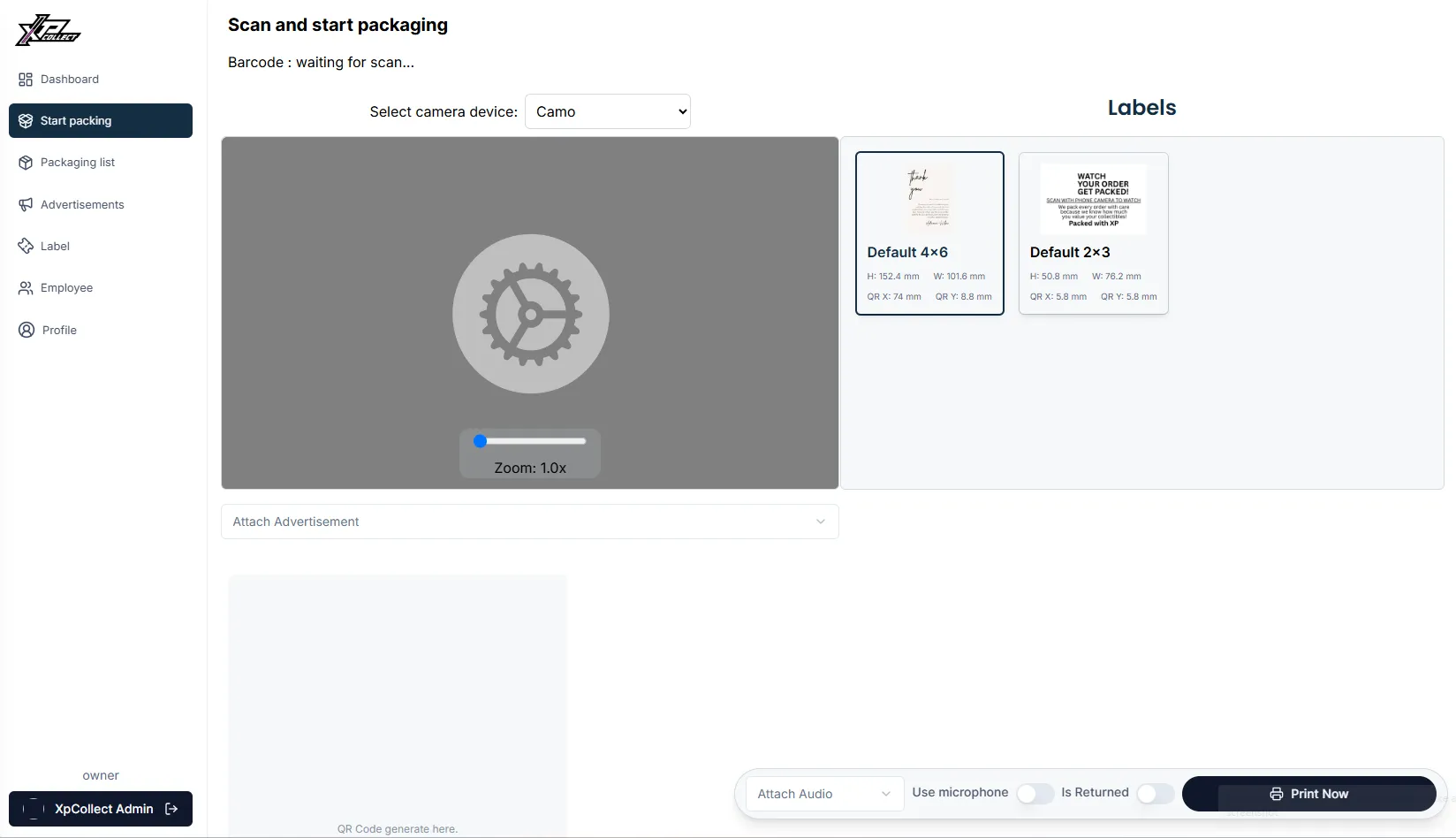 Packing station
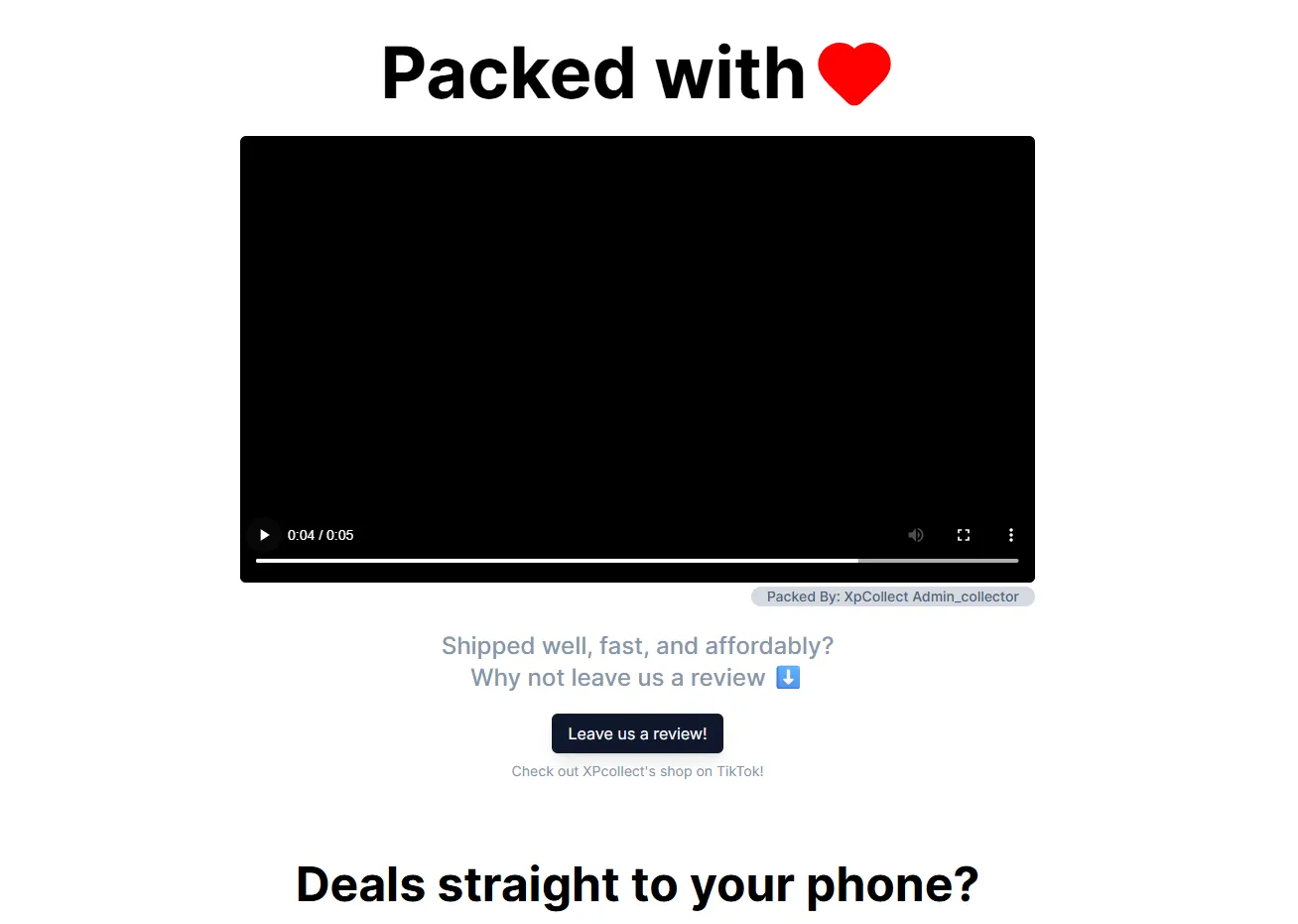 Customer video page
The situation
Online sellers lose money on “item missing” and “wrong item” claims. Without evidence, it comes down to the seller’s word against the customer’s. FulfillCam gives sellers that evidence. Every order is filmed as it’s packed, the video is tied to the order’s barcode, and a QR code printed on the shipping label lets the customer watch their own parcel being packed.
That turns a dispute tool into a branding moment too. When the customer scans the code, they see the seller’s logo, can hear a personal voice message, and get asked to leave a review or join the seller’s mailing list.
It had to work at a real packing bench, with a USB barcode scanner, a webcam and a label printer, and no special hardware or app to install. It also had to keep each seller’s videos, staff and customers fully separate on one shared platform.
What I built
I built the whole product, frontend and backend: the packing station, the seller’s business portal, the platform admin portal, the public video page customers land on, and the API and data model behind them.
-
A packing station that runs in the browser. A packer logs in with an employee code, scans the order barcode with an ordinary USB scanner, and records the video from the webcam of their choice. They can add a short voice message and pick an advertisement to show alongside the video.
-
Labels printed on the spot. When recording finishes, the app makes a print-ready label PDF at the exact size of the seller’s label stock, with the QR code at a set position in millimetres, and sends it straight to the label printer.
-
Uploads that don’t hold up packing. Videos go directly from the browser to cloud storage, so the packer can move on to the next order while the upload finishes in the background.
-
The customer video page. Scanning the QR code opens a branded page that plays the packing video, shows the seller’s advertisement, and offers review links and an email or SMS sign-up. Every view is counted.
-
The business portal. Owners and managers see daily and all-time numbers for videos recorded and watched, search the video library by barcode, sort it by date or by views, and see stats for each packer. They also manage staff, advertisements and label designs.
-
Staff roles. Owner, manager and packer, each enforced on both the server and the portal. Packers see only their own work, managers can’t add other managers, and the number of staff seats on each plan is enforced.
-
Returns. Orders can be flagged as returns, and the packing video can be emailed straight to the customer as evidence.
-
The admin portal. The FulfillCam team approves new seller accounts, manages companies and internal staff, and sets up the shared label templates and audio library.
The result
-
A complete product, built end to end: three web apps on one backend, serving warehouse packers, seller businesses and their customers.
-
Packing benches need only a browser, a webcam, a USB barcode scanner and a label printer.
-
Video storage stays affordable. Files are uploaded directly to storage behind a CDN, and a scheduled job removes uploads that were never used.
-
Delivered in phases from October 2024 to April 2026, with each round of client feedback built in: the admin and business portals split apart, then advertisements, label templates and returns.
For the technically minded
Frontend. A pnpm monorepo with two React and TypeScript apps built with Vite (the business portal and the admin portal), plus two shared packages. One holds the shared logic: API services, TanStack Query, Zustand, React Hook Form with Zod. The other is a design system built on shadcn/ui, Radix and Tailwind, so both portals share the same components and logic. The packing station records with MediaRecorder from a canvas stream at 720p, alongside a separate microphone recording, with camera and mic selection through the browser’s media device APIs. Labels are made with jsPDF and qrcode.react and printed with print-js.
Backend. Express and TypeScript, MySQL through Drizzle ORM, and Zod validation on every request. Media lives in DigitalOcean Spaces (S3-compatible) and is uploaded with pre-signed URLs. Authentication uses two layers of JWT, one for business users and a separate short-lived login by employee code for packers, with role guards on top. Redis-backed rate limiting protects the API, and Nodemailer sends transactional email.
Role and timeline
Full-stack software engineer, October 2024 to April 2026. I built the frontend and backend, from the browser packing station and both portals to the API, data model and deployment.
What this involved
- E-commerce
- Fulfilment
- Video recording
- Multi-tenant SaaS
- Admin dashboard