Web app + point of sale
Point of sale, stock and online shop for a retail business
A retail business needed one system to run its till, its stock across several locations and its online shop. I built the whole product: the web app, the server and the database.
- Client
- A multi-location retail business
- My role
- Full-stack engineer
- Timeline
- 3 months
- When
- 2026
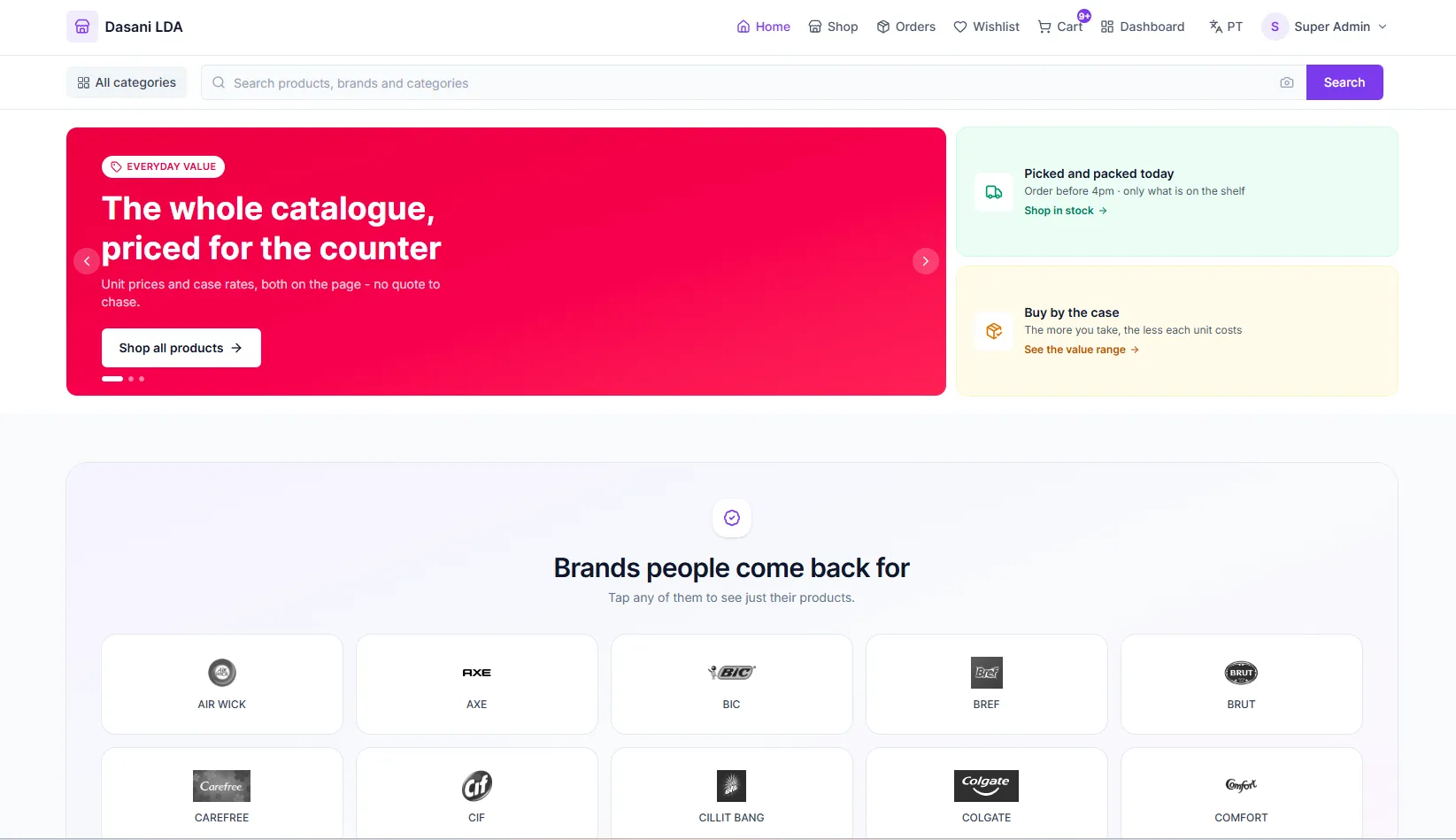 E-commerce
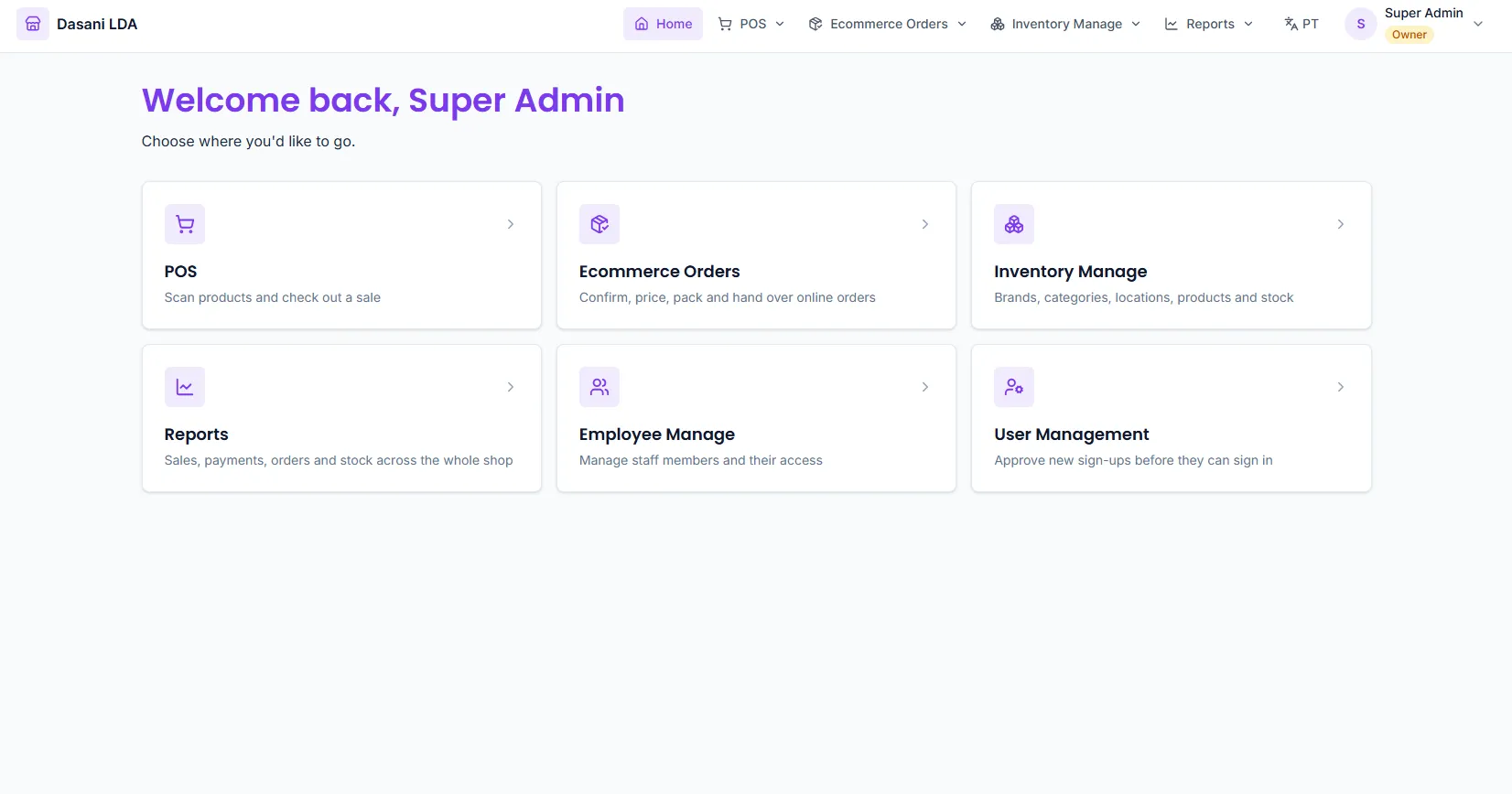 Dashboard
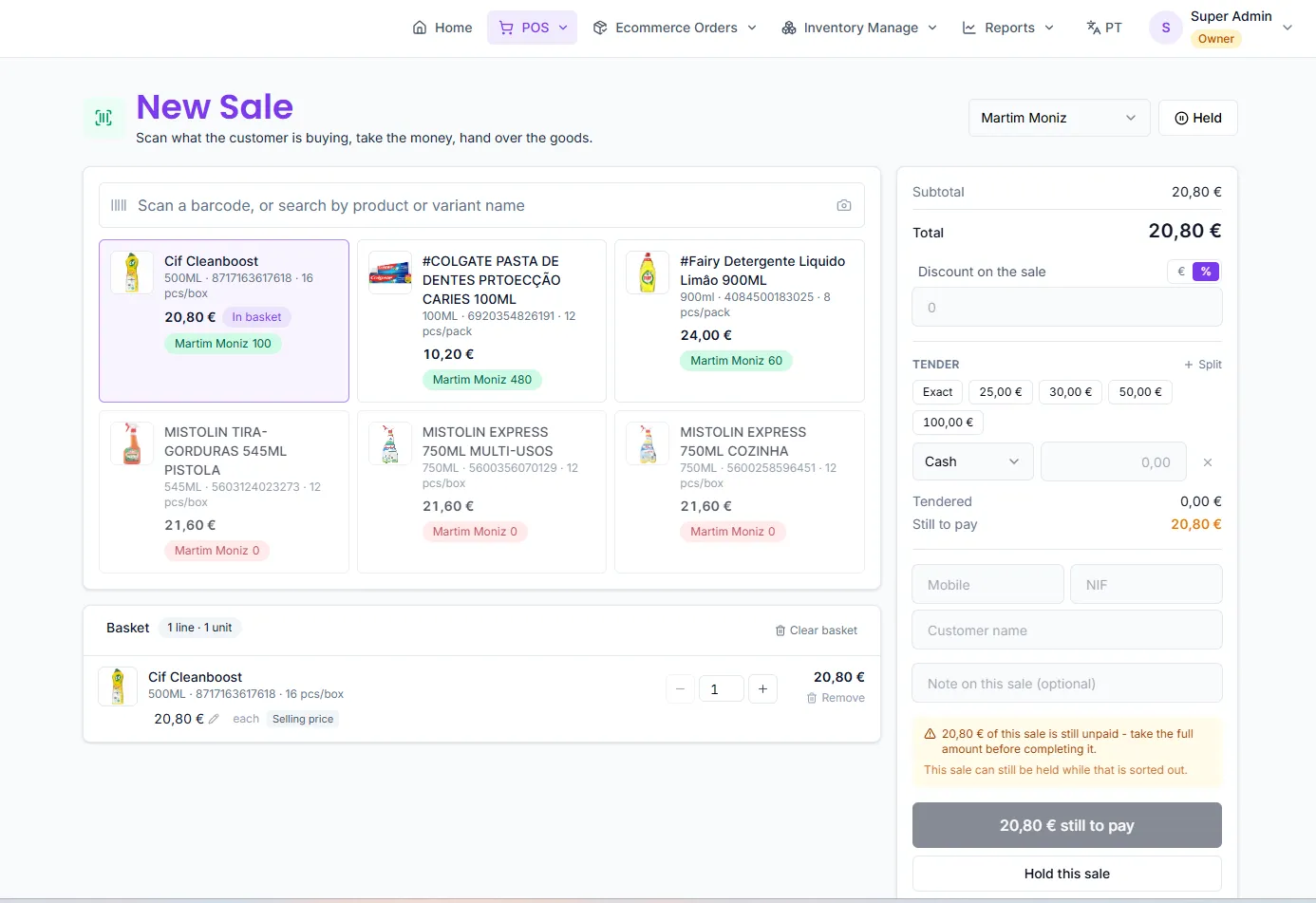 POS
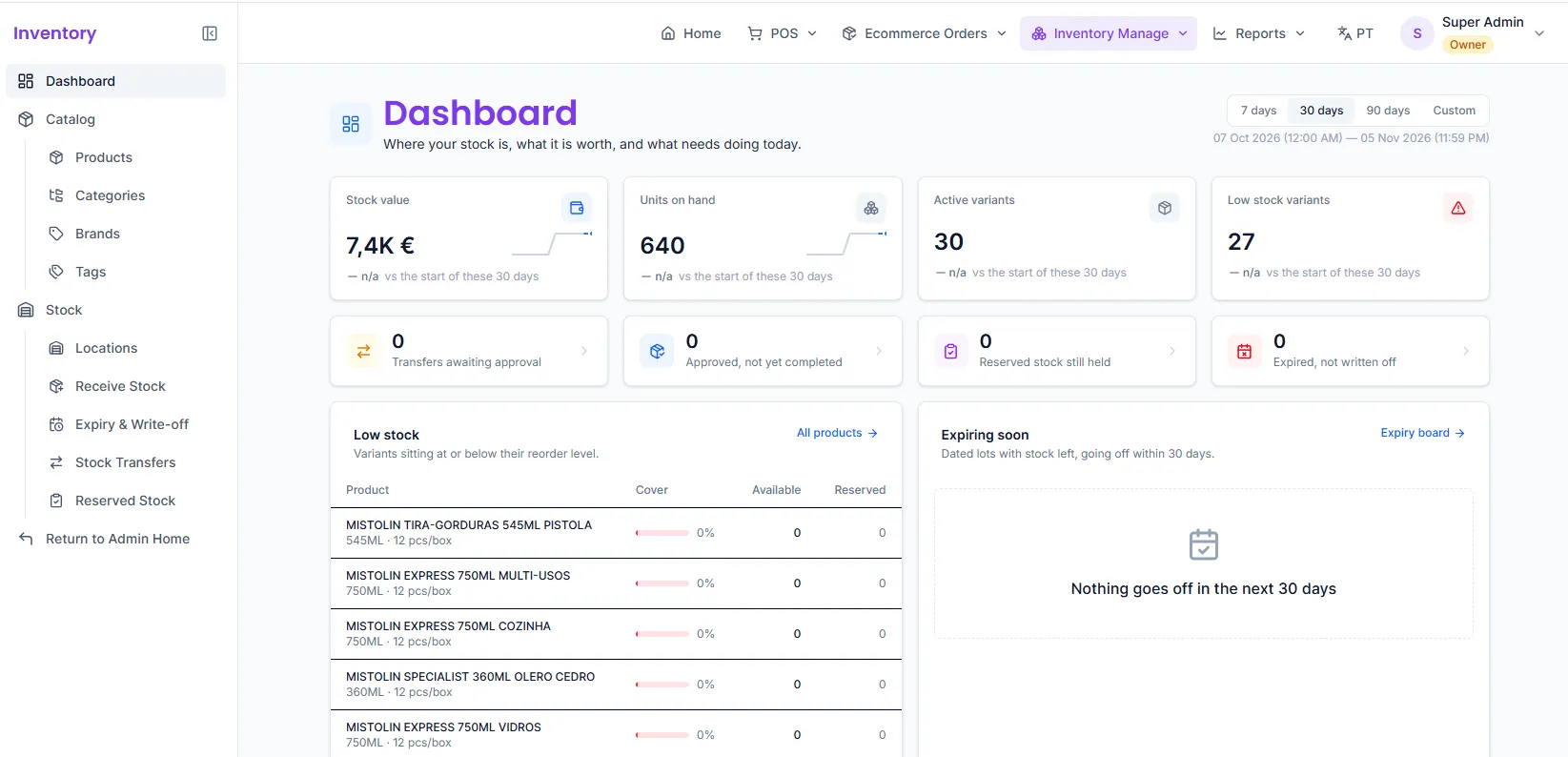 Inventory
The situation
A retail business needed one system to run its stock, its shop counter and its online store. Products come in batches, some expire, stock sits across several warehouses and stores, and the same item can sell at a retail price, a wholesale price or a promotion. If the system gets any of that wrong, the shelf count stops matching the screen, expired stock gets sold, or a customer is charged the wrong amount.
What I built
I built the whole product myself: the web app that staff and customers use, and the server and database behind it.
-
A point-of-sale till. Staff scan a barcode with a scanner or the device camera, build the sale, and take payment. A sale can be parked and picked up later, paid in more than one payment, handed between cashiers, voided or refunded. End-of-day summaries show what each cashier took.
-
Stock that stays accurate. Every stock change, whether a delivery, a sale, a transfer between locations or a manual correction, is written to a movement log, so any count can be traced back to its cause. For products that expire, the system sells the batch closest to its expiry date first, and an expiry board warns staff before stock goes off.
-
Correct pricing, every time. A product can have several prices at once, limited by date range or quantity. The system works out the right one for each line and rounds money carefully so cents never go missing. A supervisor can override a price without changing the catalogue.
-
An online shop. Customers can browse by brand and category, keep a wishlist and cart, and check out. Staff then pick, pack and ship each order from a back-office screen, and the system records which batch and location filled each item.
-
Reporting. Dashboards with sales, stock-movement and staff-payment reports, all exportable to Excel.
-
Access control. Separate permissions for customers, staff and admins, plus staff management, password reset and email notifications.
The result
- One system covering the counter, the online store and the warehouse, where before these were separate jobs.
- Stock counts that can be explained line by line, with expiring stock sold in the right order.
- Automated test and deployment pipelines, so every release is checked against a real database before it goes out.
For the technically minded
The frontend is React 19 with TypeScript and Vite, using TanStack Query and Table, Zustand, React Hook Form with Zod, and Tailwind with shadcn/Radix components. Barcode and camera scanning use ZXing, and the charts are custom-built. The backend is Express 5 with TypeScript on MySQL through Drizzle ORM, with better-auth for sessions and roles. Multi-step stock operations run inside database transactions so a failed sale can’t leave stock half-moved. Product images upload directly to S3 using presigned URLs. Logs go to Grafana Loki, and integration tests run against real MySQL and Redis using Testcontainers. CI/CD runs on GitHub Actions for both dev and production.
Role and timeline
Full-stack engineer, August 2026 to October 2026. I owned the product from start to finish: the database design, the API, the web app and the releases.
What this involved
- Point of sale
- Inventory
- E-commerce
- Retail